
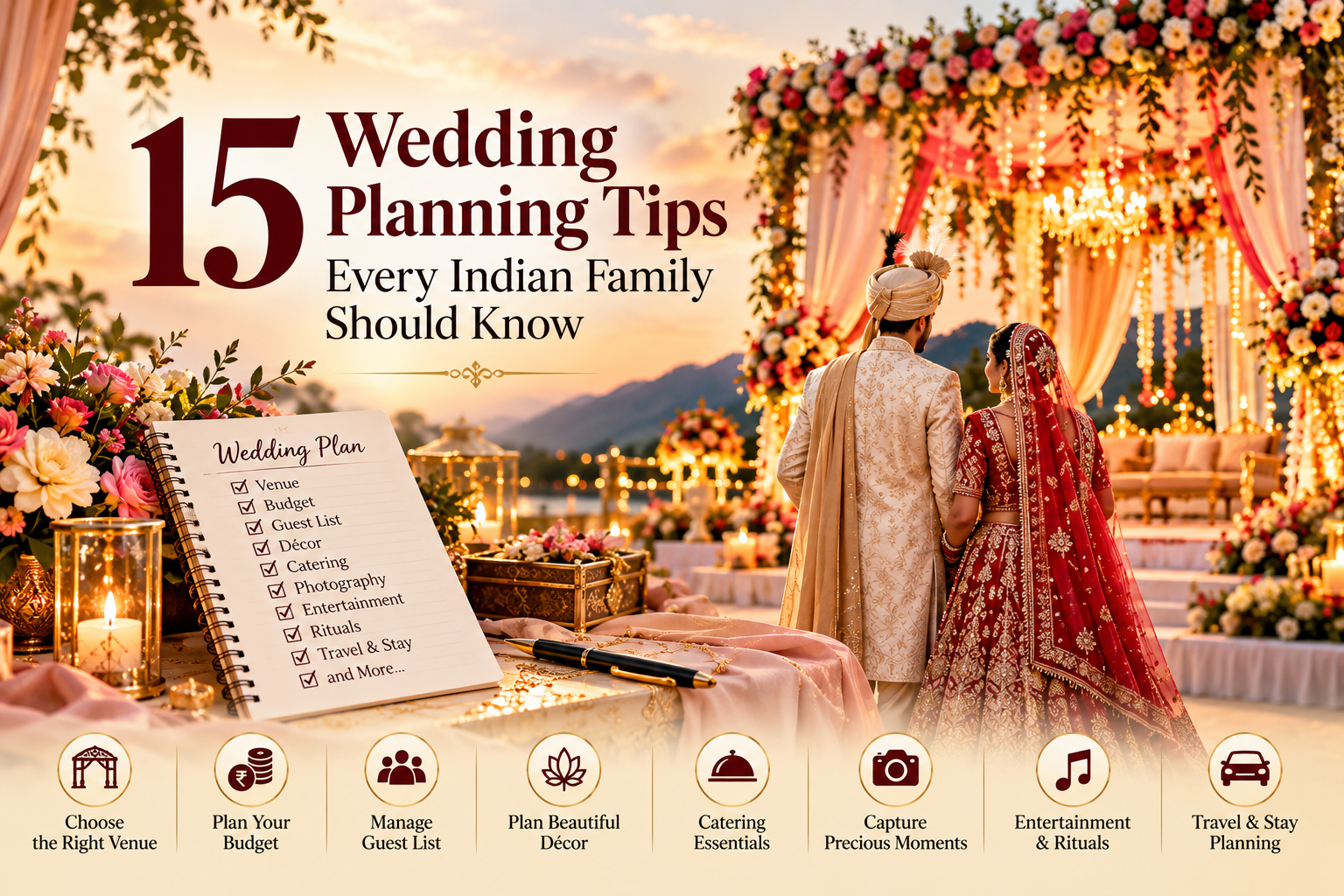
A wedding is rarely just one event. Between the haldi, mehndi, sangeet, wedding day and reception, most Indian families end up planning five celebrations inside one timeline. That's exactly why so many weddings start to feel overwhelming somewhere around the vendor-booking stage. The good news is that a few clear decisions made early can prevent most of the stress that shows up later.
Here are 15 practical tips to help you plan a wedding that stays organized, on budget and enjoyable — not just for you, but for your whole family.
1. Start Planning at Least 8 to 12 Months Ahead
Good vendors, popular venues and preferred dates get booked early, especially during wedding season. Starting 8 to 12 months out gives you room to compare options instead of settling for whoever is still available.
2. Set a Realistic Budget Before You Book Anything
Decide your total budget first, then divide it across venue, catering, decor, photography, outfits and miscellaneous costs. Keep 10 to 15 percent aside as a buffer. Families who skip this step often overspend on the first few bookings and feel the pinch later.
3. Choose a Venue That Matches Your Guest Count
A venue that's too large can feel empty in photos, and one that's too small will feel crowded by the reception. Confirm your guest list before you finalize the venue, not after.
4. Plan Each Ceremony as Its Own Event
Haldi, mehndi, sangeet, wedding and reception each have a different mood, guest list and setup. Treating them as one blurred event usually leads to rushed decor changes and confused vendors on the day.
- Haldi: Simple, bright decor with easy cleanup.
- Mehndi: Comfortable seating since guests will be there for hours.
- Sangeet: Stage and sound setup for performances.
- Wedding day: Mandap placement with rituals and guest sightlines in mind.
- Reception: Formal decor built around photos and dinner service.
5. Book Core Vendors Early
Decorators, caterers and photographers are usually the first vendors to get fully booked for a season. Lock these in as soon as your date and venue are confirmed, even if smaller details are still undecided.
6. Get Everything in Writing
Verbal promises are easy to forget once wedding season gets busy. Ask every vendor for a written quote that lists exactly what's included, the payment schedule and the cancellation terms.
7. Build a Day-of Timeline and Share It Early
A simple hour-by-hour schedule prevents the most common wedding-day problem: everyone waiting on everyone else. Share this timeline with your family, vendors and wedding party at least a week before the event.
8. Don't Underestimate Guest Comfort
Shade, seating, clean restrooms and clear signage matter as much as decor. A beautiful venue can still leave guests uncomfortable if these basics are missed, especially for outdoor functions.
9. Have a Backup Plan for Weather
If any part of your wedding is outdoors, confirm a covered backup option with your venue in advance. Ask specifically how quickly they can execute the switch if it's needed on the day.
10. Delegate Instead of Doing Everything Yourself
Assign one point person for vendor coordination, one for guest logistics and one for the wedding-day timeline. Trying to manage everything personally is one of the fastest ways to burn out before the wedding even begins.
11. Keep a Running Vendor Contact Sheet
List every vendor's name, phone number, service and payment status in one place. This single sheet saves enormous time when something needs a quick follow-up close to the date.
12. Plan Outfits With Enough Time for Alterations
Finalize outfits at least 2 months before the wedding so there's time for fittings and alterations. Last-minute outfit changes add stress that's easy to avoid with earlier planning.
13. Confirm Catering Numbers Close to the Date
Guest counts shift as RSVPs come in. Give your caterer a final headcount 5 to 7 days before each function so food quantities and service staff can be adjusted accurately.
14. Take Photos of Every Setup Before the Event
Ask your decorator to send setup photos as soon as each space is ready. This gives you time to request small fixes before guests arrive, instead of discovering an issue mid-event.
15. Work With a Planner Who Understands Your Vision
A wedding planner should ask about your priorities, not just show you a standard package. The right planner brings vendor coordination, decor direction and day-of management together so your family can actually enjoy the celebration instead of running it.
Final Thoughts
None of these tips require a huge budget — they just require early decisions and clear communication. Start with your date, guest count and budget, then build outward from there. If you'd like help turning this checklist into an actual event plan, our team at MangalMilan Events can walk you through venue, decor, catering and vendor coordination for your specific date and city.